Monday, May 15, 2017

The Life-Changing Magic of Not Giving a F*ck, by Sarah Knight

When I first saw this book I thought the author had written a manifesto against Marie Kondo's The Life-Changing Magic of Tidying Up: The Japanese Art of Organizing and Decluttering, which I reviewed on this blog in 2014. However, I was pleased to see that author Sarah Knight confessed to reading Ms. Kondo's book on tidying up and had actually applied many of the concepts. In fact, she was inspired to write this book about how to de-clutter your personal life and schedule, and to set priorities for what really matters to you. In this book, she writes about how to make the transition to being able to do what you want to do rather than doing what is expected of you.

Ms. Knight suggests that readers think about what is truly important to them. What do they really care about? She discusses work, friends, family, and more. Throughout the book she uses anecdotes from her own life to make her point, and she suggests exercises at the end of each chapter to help readers think about their own priorities. Overall, she provides a lot of food for thought and gives readers tools they can use in their own lives to help cut down on the overwhelming number of obligations that everyone takes on. She does all this with a strong dose of humor.

If I have any criticism of this book, it's the overuse of the work "f*ck." It's in every section title, many chapter titles, and peppered through almost every paragraph. I'm not a prude or afraid to use the word "f*ck," but it does get old after a while. In addition, she strains to use it in phrases where it's just not natural. I think the book would have been stronger if she had resisted the urge to use that word so frequently and limited it to just the title and a few other strategic uses. Nevertheless, this book has a lot of good advice in it, and I would recommend it for anyone who's interested in a humorous take on time management and taking control of your life.

Sarah Knight. The Life-Changing Magic of Not Giving a F*ck: How to Stop Spending Time You Don't Have with People You Don't Like Doing Things You Don't Want To Do. New York: Little, Brown and Company, 2015. 208 pages. ISBN 9780316270724.


Recent reads May 2017

In no particular order, here are some of my recent reads:

I loved this unconventional novel about Lincoln's young son Willie's death.

Charming, funny, sweet, and well written.


These should be called "Difficult stories." Very well-written stories about women and the challenges they face in their relationships.


I'm a fan of Jo Nesbo, but this first novel is a bit amateurish.


This novel has been getting a lot of good reviews, but I found it a bit predictable.


I really enjoyed this novel about family and relationships.


All about the reading brain; very interesting if you're interested in brain science and how the brain has evolved to read.


This is a great antidote to today's politics. Thoughtful and well written. I have to read more like this!

Thursday, May 11, 2017

Future humans, by Scott Solomon

In this fascinating look at how humans continue to evolve, evolutionary biologist Scott Solomon explains the ways in which humans are still adapting through evolution to changes in their environment. Writing in a style that is clear and straightforward, he makes difficult concepts easy to understand.
Mapping the human genome has allowed researchers to study how evolution happened in the past. They've learned that microscopic organisms have been major drivers of evolution in humans, and it appears to be continuing today. Additionally, because humans are moving around the world in a way that never happened before the modern age, there is increasing genetic variation, which leads to evolutionary change. Even our changing diets, including higher calorie processed food and less fiber, may lead to changes in how we evolve.

It is clear that not only have we gotten where we are through the process of evolution, but that evolution is continuing all around us. I think this book would be of interest to anyone who enjoys popular science, especially the life sciences. It includes a robust notes section and an index.

Scott Solomon. Future Humans: Inside the Science of our Continuing Evolution. New Haven: Yale University Press, 2016. 225 pages. ISBN 9780300208719.

Sunday, April 23, 2017

Wellth, by Jason Wachob

Author Jason Wachob is an entrepreneur and founder of mindbodygreen, a healthy lifestyle web site with articles such as "If you only have 2 minutes to meditate, do this" and "The best spring & summer overnight oat recipes on the internet." In Wellth: How to Build a Life, Not a Resume, he shares his own and others' stories to illustrate the principles that he believes will transform your life.

Through short chapters with titles such as Eat, Move, Work, Believe, Explore, Breathe, Feel, Love, Heal, Thank, Ground, Live, and Laugh, he describes his key points on how to be both physically and mentally healthy, and how to live a balanced lifestyle. Each chapter includes inspiring quotes from people as varied as Bill Maher and Shakespeare. Each chapter includes a section called "Grow Your Life Savings" that is written by an expert on the subject of that particular chapter. This is followed by a short section called "A Quick Deposit in Your Wellth Account," which lists four tips that sum up the chapter. Mr. Wachob uses anecdotes from his own life to share how he learned lessons in each of these areas. Wellth also includes an index and a notes and references section.

I personally enjoy reading books that provide tips on how to be healthy, whether through an improved diet, exercise, meditation, yoga, or other methods. Because I've read so many of these types of books, not to mention magazine and internet articles, this book didn't have much to teach me. That isn't to say that I didn't enjoy it; in fact, I did. It's an easy read on a topic that I'm familiar with and enjoy reading about. I found one particular discussion interesting; this was the chapter on health (Heal), in which Mr. Wachob discusses how Eastern and Western medicine can complement each other. However, as with the rest of the book, the discussions are only introductory; for anything in depth, you'll have to investigate elsewhere. In this sense, the book reflects the author's web site, which provides short magazine-style articles. I enjoy reading them, but there's not a lot of substance. Nevertheless, for someone who's just beginning to think about these issues, I think this would be a good introductory book. It introduces the reader to many issues that are problems for people today; it has a friendly and easy style, and it's a quick read. For others who are already steeped in the healthy lifestyle literature, I recommend looking for something with more depth.

I received this book for review from Blogging for Books.

Jason Wachob. Wellth: How to Build a Life, not a Resume. New York: Harmony Books, 2016. 1st paperback edition. 244 pages. ISBN 9781101904503.

Sunday, April 16, 2017

The Acid Watcher Diet, by Jonathan Aviv

If you've suffered from heartburn or acid reflux, this book will teach you how to heal and prevent future episodes of either. Dr. Jonathan Aviv is the clinical director for the Voice and Swallowing Center of ENT and Allergy Associates as well as a clinical professor of otolaryngology at the Icahn School of Medicine at Mount Sinai in New York. With a clear and concise writing style, Dr. Aviv explains the causes of heartburn and acid reflux, and how to heal and prevent them.

The Acid Watcher Diet is composed of three part. The first addresses the various diseases caused by acid reflux. Esophageal cancer, caused by chronic heartburn and acid reflux, is given its own chapter. Inflammation caused by acid reflux can generate problems beyond the stomach and esophagus. In the second part, Dr. Aviv discusses diet, fiber, low versus high pH foods, and how to break dietary habits that promote acidity. Finally, a 28-day plan for healing is described, as well as follow up maintenance plans. This includes meal plans and recipes.

The 28-day plan will be difficult for many to achieve. It includes eliminating carbonated sodas, coffee and tea, citrus fruits, tomatoes, vinegar, wine, caffeine, chocolate, alcohol, mint, raw onion, and raw garlic. Dr. Aviv also recommends eliminating smoking, processed foods, and fried foods. He further recommends regular exercise, and predicts that anyone who eats his recommended diet will also likely lose weight.

I found Dr. Aviv's arguments entirely convincing and recommend The Acid Watcher Diet to anyone who suffers from heartburn, acid reflux, or similar ailments. I received this book from Blogging for Books.

Jonathan Aviv. The Acid Watcher Diet: A 28-Day Reflux Prevention and Healing Program. New York: Harmony Books, 2017. 293 pages. ISBN 9781101905586.


A Deadly Wandering, by Matt Richtel

A Deadly Wandering tells the story of a young man named Reggie Shaw who was texting while driving to work one morning. He was weaving from side to side on a highway in Utah, and eventually side-swiped a car going in the other direction, causing it to go into a spin. The spinning car crossed into the other lane and was T-boned by a truck pulling a trailer with tons of heavy equipment. The momentum of the crash killed the two men in the car instantly. Reggie was barely scratched.


Author Matt Richtel had previously investigated how texting and other distractions affect driving. In A Deadly Wandering he delves deeply into the research of attention as well as the growing public awareness of the dangers of distracted driving. At the time of the crash depicted in this book, only one state had outlawed texting while driving, but cases like this would bring about a rapid change in the laws across the country.

Mr. Richtel also tells Reggie's story. For more than a year he was in denial that his texting caused the crash. He denied texting at the time of the crash and it was only when it was proven through the cell carrier's phone records that he had been sending and receiving texts at the time of the crash that he took responsibility for his actions. Since then he has become an evangelist for driving safety and regularly speaks to young people about the dangers of driving and texting.

Withe A Deadly Wandering, Mr. Richtel brings together not only Reggie's story, but also those of the victims and their advocates who wanted only to find justice. Combined with the story of the neuroscientists who are investigating the impact of distraction on the human brain, this book is a warning for anyone who has been tempted to answer the phone or look at a text while driving.

Matt Richtel. A Deadly Wandering: A Tale of Tragedy and Redemption in the Age of Attention. New York: William Morrow, an imprint of HarperCollins, 2014. Advance Reader's Edition. 389 pages. ISBN 9780062284068.

Sunday, March 5, 2017

A Modern Way to Cook, by Anna Jones

A Modern Way to Cook is an excellent new cookbook that contains more than 150 vegetarian recipes, arranged by how long it takes to prepare them. I've had the book for a while but I wanted to write the review only after I've made a number of the recipes. I have to admit that with only one or two exceptions, I've stuck with the recipes that can be made in 15-30 minutes, but I've enjoyed all of them so much that I've made several of them many times over the past couple of months.

The author's descriptions of how to make many of the recipes have the cook getting all of the ingredients out, then quickly doing one thing after another. I think some of the recipes take me longer than she predicts, mainly because I keep going back to the recipes to make sure that I'm doing things right. Once a cook gets familiar enough with a recipe, I expect the times to be more accurate. One of the time-saving methods the author recommends is to always have a kettle on with boiling water. This shortens the time for soups to finish, for example.

The first recipe that I tried was a 15-minute recipe for kale, tomato, and lemon magic one-pot spaghetti. It called for adding pasta, cherry tomatoes, lemon zest, oil, and salt to a pan; then adding a quart of water. After everything cooks, you can add kale to cook for a few minutes, then finish everything with parmesan cheese. This was a wonderful dish, made unique by the lemon zest.

Another recipe that I liked a lot was green pea and coconut soup. It called for frozen peas, coconut milk, green onions, lemon juice, and vegetable stock. It was a very quick recipe, with the final step being to put the soup through a blender. Really wonderful. One recipe that I've made at least a dozen times now is called pour-over soup. Vegetables are sliced very thinly into a bowl along with miso paste, ginger, sesame oil, soy sauce, vermicelli, and more, then boiling water is poured over. It's like a flavorful salad in a bowl. The recipe calls for greens, zucchini, and snap peas, but I use whatever I have, including spinach, zucchini, tomatoes, onion, red or green pepper, mushrooms, etc. Easy to make and filling.

The avocado, tahini, and olive spread is wonderful, takes only a few minutes, and is great with pita chips. I served this at my last book club meeting and it got a thumbs up from the other members. The avocado, cucumber, and fennel soup was really good, although I made a double recipe and it made a lot. Even with lemon juice it discolored slightly, although the flavor was unaffected. Good for a summer lunch! One of my favorites was called a Sunday vat of soup, and includes a leek, red onion, carrots, celery, sweet potatoes, and a butternut squash. All of this gets cooked along with some spices and broth, then blended. The author shares a number of variations, including serving it with pumpkin seeds, or sour cream. It was great no matter how it was served.

Finally, the one dessert that I tried was tahini-drizzled superfruit. Any combination of fruit can be used. It should be sliced or cubed on a plate, then drizzled with a sauce made from tahini, honey, lemon, and cinnamon. I've made this a number of times over the last several months.

This is really a wonderful cookbook with recipes that I never would have thought up on my own. The author calls for a number of ingredients that were not formerly a typical item in my pantry, but that has now changed. I would recommend this book to anyone who likes to try new recipes and enjoys vegetarian foods.

I received this book from Blogging for Books.

Anna Jones. A Modern Way to Cook: 150+ Vegetarian Recipes for Quick, Flavor-Packed Meals. Berkeley: Ten Speed Press, 2015. 351 pages. ISBN 9780399578427.

Sunday, January 29, 2017

Catching up on Non-Fiction: November 2016-January 2017

Faith Salie. Approval Junkie: Adventures in Caring Too Much. New York: Crown, 2016. 256 pages. ISBN 9780553419931.

Faith Salie was the emcee at one of the special events that I attended during the 2016 BookExpo America convention. She was one of the best emcees that I've seen there; she had read all of the books and had funny things to say about and to each of the other presenters. Her book is both humorous and heartfelt.


Adam Grant. Originals: How Non-Conformists Move the World. New York: Viking, 2016. 322 pages. ISBN 9780399564192.

I really liked Adam Grant's Give and Take, which I reviewed here, but this book wasn't as interesting for me. It could be that I read it too soon after reading Malcolm Gladwell's Outliers (reviewed here), since they address some of the same themes. Nevertheless, it was entertaining and a quick read.


Lawrence Wright. Going Clear: Scientology, Hollywood, and the Prison of Belief. New York: Vintage Books, 2013. 538 pages. ISBN 9780307745309.

This is a fascinating but frightening book about the history and development of Scientology as a religion. It's particularly interesting in our current political climate when we see how credulous people can be when they really want to believe something's true in spite of all evidence to the contrary. I recommend this well-written and deeply researched book.

Catching up on Fiction November 2016-January 2017

Chinua Achebe. Things Fall Apart. New York: Fawcett Crest, 1959. 192 pages. ISBN 0449208109.

This classic is the most-read book by an African author. It's fascinating and incredibly sad.


Anthony Marra. The Tsar of Love and Techno. New York: Hogarth, 2015. 334 pages. ISBN 9780770436438.

I'm not usually a fan of short stories, but these intertwined stories that cross generations in present day and Soviet-era Russia and Chechnya feels like a novel. I found myself going back and forth to remind myself how the characters in the different time periods were related. Wonderful writing, but again, very sad.


David Baldacci. The Forgotten. New York: Grand Central Publishing, 2012. 446 pages. ISBN 9781455523153.

If you like fast-paced thrillers, this is an excellent choice.


Joakim Zander. The Swimmer. New York: Harper Collins, 2013. 417 pages. ISBN 9780062337245.

In the mood for another thriller, I picked up this first novel by Sweden's Joakim Zander. It was very satisfying; I recommend it to anyone who likes the genre.


Kerry Kletter. The First Time She Drowned. New York: Philomel Books, 2016. 341 pages. ISBN 9780399171031.

I guess I was really in the mood for some escapism after the election. This psychological thriller will keep you guessing, and perhaps a little distracted from our all-too-scary reality.


Jacqueline Winspear. Leaving Everything Most Loved. New York: Harper Collins, 2013. 339 pages. ISBN 9780062049605.

This is another in the excellent Maisie Dobbs mystery series. Good writing, interesting characters, and the fascinating setting of between-the-two-world-wars England.


Lily King. The Pleasing Hour. New York: Atlantic Monthly Press, 1999. 237 pages. ISBN 0871137542.

I loved this novel by Lily King, who wrote the later Euphoria, reviewed here.


Stephen King. Gerald's Game. New York: Viking, 1992. 332 pages. ISBN 0670846503.

This novel about a woman whose husband dies during some adventurous sex, leaving her handcuffed to the bed in their summer cabin during the off-season, should be a warning to everyone to think through their decisions before they make them! Gripping and suspenseful.


Wednesday, November 2, 2016

A Lesson in Secrets, by Jacqueline Winspear

After reading Maisie Dobbs I discovered that I had two more books from that series on my shelves at home. Although twelve books have been published so far, I decided to jump in on this book, which is the 7th. It turns out that it's not necessary to read them in order; it was easy to pick up with Maisie's life even though books two through six must have been very eventful. This book takes place in 1932 when Maisie is asked to investigate possible espionage activity at a college in Cambridge. At the same time Maisie takes on a case investigating the murder of a friend. As with the earlier book, Ms. Winspear really brings the time period to life. A focal point is the rise of Nazism, even in England, before people realized how dangerous it really was. A great read!

Jacqueline Winspear. A Lesson in Secrets. New York: HarperCollins, 2011. 325 pages. ISBN 9780061727672. Uncorrected proof.

Maisie Dobbs, by Jacqueline Winspear


Maisie Dobbs is the first book in a series about a WWI nurse who opens her own detective agency. Through alternating chapters we learn about her early years working as a servant, and then attending college and serving as a nurse in France during WWI. In the meantime, she begins to investigate the mystery of how some badly disfigured veterans ended up dying all the same way. Jacqueline Winspear is an excellent writer, and brings the 1920s to life in this debut.

Jacqueline Winspear. Maisie Dobbs. New York: Penguin Books, 2003. 292 pages. ISBN 0142004332.

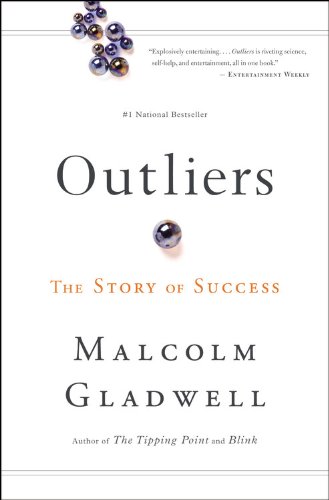
Outliers, by Malcolm Gladwell


I finally got around to reading this book, although I read so many reviews of it I felt like I'd read it before. As with his others, it was a fun romp through a lot of anecdotes and some research. It was also a bit inspiring to know what it takes to become a true expert at something. At this point in my life, I can say that the only things that I have spent 10,000 hours on is reading and perhaps writing!


Malcolm Gladwell. Outliers: The Story of Success. New York: Little, Brown and Company, 2008. 309 pages. ISBN 9780316017923.

Saturday, October 22, 2016

The Interpretation of Murder, by Jed Rubenfeld

Sigmund Freud's 1909 visit to New York and Boston serves as the backdrop to this page-turner of a mystery novel. Doctor Stratham Younger is asked to psychoanalyze a young woman, Nora Harcourt, who was brutally attacked but has lost her memory of the crime. It quickly becomes apparent this was not the first attack of this kind. As Younger investigates the crimes from his viewpoint as a doctor, Detective Littlemore begins to investigate the crimes as well, working under the supervision of Coroner Hugel. Bodies go missing, other bodies are found, and the plot twists and turns with first one likely suspect and then another. Throughout Younger applies Freudian theories in his attempts to learn the truth from Nora. I found the depictions of early 20th century New York City and its citizens fascinating, along with the discussions and dispute between the various factions of psychiatry, leading up to Carl Yung's break with Freud. Younger uses Shakespeare's Hamlet to develop his theories about the crime and its solution.

Jed Rubenfeld is a law professor at Yale. This is his first novel but not his first book. Among others he co-authored (along with his wife Amy Chua) The Triple Package: How Three Unlikely Traits Explain the Rise and Fall of Cultural Groups in America, reviewed here. He's written a follow up to The Interpretation of Murder, another work that explores Freud: The Death Instinct, which I look forward to reading soon.

Jed Rubenfeld. The Interpretation of Murder. New York: Henry Holt, 2006. 367 pages. ISBN 9780805080988. Advance Reader's Edition.

Friday, October 21, 2016

Think: Why You Should Question Everything, by Guy P. Harrison

Author Guy P. Harrison provides a thoughtful analysis of why it's important to be a skeptical thinker. His thesis is that our memories are not trustworthy, and people are too easily swayed by questionable arguments. He recommends asking questions to get at the truth behind all statements. Throughout the book he shares research done that demonstrates that our memories change over time, and in fact, may not even be memories at all. Sometimes something we watched on television or saw in a movie becomes part of our memory, as if it happened to us. Many studies have been done that show how we don't even see what's right in front of us, especially when we're focusing on something else. I found the chapter on brain health particularly interesting. He recommends diet and physical exercise as ways to keep the brain healthy and alert, as well as stimulating mental exercises such as studying languages and learning new skills.


Guy P. Harrison. Think: Why You Should Question Everything. New York: Prometheus Books, 2013. 300 pages. ISBN 9781616148072.

Today Will Be Different, by Maria Semple

I really loved Today Will Be Different by Maria Semple. It's about one day in the life of a woman whose life is spinning out of control. Her son is faking an illness to avoid school. Her husband has taken two weeks vacation but has left work every day as if he's going to work. She has missed her manuscript deadline by years, and can't seem to manage to get anything done. This book is laugh out loud funny. I enjoyed it as much as I did her earlier book, Where'd You Go, Bernadette? It's only been out for a few weeks; with 63 reviews on Amazon it's only earned 3.3 out of five stars; however, I think it deserves a much higher rating than that. I would recommend either book to readers who enjoy good and funny writing, along with memorable characters and slightly-outlandish plots.

Maria Semple. Today Will Be Different. New York: Little, Brown and Company, 2016. 272 pages. ISBN 9780316403436. Advance Reading Copy.

The Underground Railroad, by Colson Whitehead

The Underground Railroad, by Colson Whitehead, is a riveting novel about runaway slaves in the south just before the Civil War. Mr. Whitehead has worked in some elements of alternative history or fantasy, in that different regions of the country have reacted to slavery in different ways, and the underground railroad is not metaphorical, but literally an underground railroad. Mr. Whitehead's depictions of violence and betrayal are painful to read, but his writing is excellent and his characters are fascinating. An Oprah pick, The Underground Railroad has 910 reviews on Amazon, with the average rating being 4.1. Mr. Whitehead is also the author of The Intuitionist. I would recommend either book to readers who enjoy thoughtful fiction that addresses contemporary and historical issues of race.

Colson Whitehead. The Underground Railroad. New York: Doubleday, 2016. 320 pages. ISBN 9780385542364. Advance Reading Copy.

Sunday, October 16, 2016

The Triple Package, by Amy Chua and Jed Rubenfeld

As I mentioned in my last blog post, when I read Hillbilly Elegy by J.D. Vance (reviewed here), I was inspired to pick up Amy Chua's Battle Hymn of the Tiger Mother. Amy Chua had served as a mentor to Mr. Vance when he was struggling with whether or not to continue his studies at Yale Law School. When I was looking into Ms. Chua and considering whether to read Battle Hymn, I noticed that she had also co-authored a book with her husband Jed Rubenfeld. The Triple Package: How Three Unlikely Traits Explain the Rise and Fall of Cultural Groups in America picks up on some of the themes in Battle Hymn, by addressing what it is about certain groups, primarily immigrant groups, that cause their children to excel in education and business.

According to Ms. Chua and Mr. Rubenfeld, the three traits that most of these groups have in common are a sense of superiority, a sense of insecurity, and impulse control. They address each of these traits in turn, using historical and contemporary examples to illustrate their claims. They highlight the groups that have out-performed and debunked claims that their success has anything to do with genetics or innate intelligence. Not only do they explore the traits that cause groups to succeed, but they also describe how most of these traits are lost in subsequent generations. They discuss how some trends, such as the self-esteem movement, have hurt children's ability to excel. They also convincingly point out that when some groups do poorly, it is often as a result of society's active attempts through bigotry and discrimination to prevent them from improving. This book is heavily researched and convincing. It would be a valuable read for anyone who's interested in how to improve everyone's chances to excel and succeed.

Amy Chua and Jed Rubenfeld. The Triple Package: How Three Unlikely Traits Explain the Rise and Fall of Cultural Groups in America. New York: Penguin Books, 2015. 336 pages. ISBN 9780143126355.

Saturday, October 15, 2016

Battle Hymn of the Tiger Mother, by Amy Chua

When Battle Hymn of the Tiger Mother came out in 2011, I read a number of reviews and articles about it, most of them criticizing author Amy Chua for her extremely strict style of parenting. Many reviewers were offended by how hard she pushed her daughters to excel, always expecting the highest grades, insisting that they practice their musical instruments for 4-6 hours a day, and not allowing them to participate in typical childhood rites such as sleepovers because they were a waste of valuable time. They seemed to be most offended by her rejection of her children's homemade birthday cards as not good enough, and her insistence that they re-do them. I read so many articles about the book that I felt like I didn't need to read the book itself. That all changed when I recently read Hillbilly Elegy, by J.D.Vance, which I reviewed in this blog post. Author Vance wrote briefly about how Amy Chua had been a powerful influence on him during his years at Yale Law School, and that piqued my interest in Ms. Chua and her books.


What I found while reading Battle Hymn of the Tiger Mother was that Ms. Chua is a very funny writer. Although she is absolutely committed to helping her children succeed, she is also very reflective about her own motivations and considers at every step whether what she's doing is right. She pushes her kids as far as she can, but finally has to give in when her younger daughter declares her need to make her own decisions about what instrument she wants to play and other extracurricular activities she wants to explore (e.g., tennis). I found the book charming and funny, and although she may go further than most parents are willing to go, every parent could probably learn something about pushing their children a little harder.

Amy Chua. Battle Hymn of the Tiger Mother. New York: Penguin Books, 2011. 239 pages. ISBN 9780143120582.

Saturday, October 8, 2016

Between the World and Me, by Ta-Nehisi Coates

Between the World and Me is a powerful meditation on race in America. Author Ta-Nehisi Coates shares what it was like for him growing up in America where the color of his skin makes him more vulnerable to violence and death. Written as a letter to his teenage son, it exposes truths that many have denied and avoided. Throughout the book Mr. Coates shares personal stories that reveal how his thinking about being black in America has evolved during his life.

We learn about growing up in the violent Baltimore of the 1970s and 1980s. His mother was a teacher and his father was a librarian and publisher. We learn about how he met his wife, and his years at Howard University. But what stands out most are the wrenching personal stories such as how his friend Prince Jones, an outstanding student and born-again Christian, was shot and killed by police. Or the time he was traveling and a white woman pushed his four-year-old son out of the way in an airport because he was walking too slowly. When he rebuked the woman for pushing his son, bystanders acted like he was the one in the wrong. The anger and even rage that episodes like those invoke are completely understandable, as is the ceaseless feeling of vulnerability and hopelessness.

Mr. Coates' book is wide-ranging, discussing history, current events, personal stories, and much more. It's a short and well-written book, but it's painful to read, realizing how much we need to do to make things better for everyone, not just white people (or as Mr. Coates would say "people who think they are white"). Reading this book in the current political climate is even more painful, with so many bigots and racists being given so much attention on the news every day. He ends the book by encouraging his son to continue to struggle, but not to change white people who have to learn to change themselves. It's not a very hopeful ending, but perhaps more realistic. I would recommend this book to anyone who wants to understand more about the forces and feelings that shape our country.

Ta-Nehisi Coates. Between the World and Me. New York: Spiegel & Grau, 2015. 156 pages. ISBN 9780812993547. Advance Reader's Edition.

Sunday, September 18, 2016

Lunch at the Piccadilly, by Clyde Edgerton

This short novel revolves around Carl, a middle-aged single man who is taking care of his favorite aunt, Lil Olive. After falling in the bathtub (twice) she's been placed in a convalescent home to recover. She hopes to return to her apartment one day, and drive again, but Carl knows that her hopes are not likely to materialize. As Lil and Carl chat with the many residents of her home, we learn about their very different personalities and back stories.


This is a low-key but charming book. The ladies' adventures and conversations are humorous, spiced up with their eccentric personalities and hearing difficulties. A newcomer (a retired preacher) makes waves with his sermons, but he also befriends Carl and teaches him how to play the guitar. Carl develops a crush on one of the home's employees, Anna, and takes her out on a date. His Aunt Lil steals a car and takes her girlfriends out shopping. As the story progresses it's clear that Lil is in the beginning stages of dementia. Lunch at the Piccadilly is humorous and touching. Edgerton's writing is enjoyable and fun, but also empathetic and caring. He doesn't try to tie up all the loose ends of the story; like real life, we don't always know how things end for everyone.

Clyde Edgerton. Lunch at the Piccadilly. Chapel Hill, NC: Algonquin Books of Chapel Hill, 2003. Advance uncorrected proof. 251 pages. ISBN 1565121953.

Overcomplicated: Technology at the Limits of Comprehension, by Samuel Arbesman

According to the blurb, Overcomplicated "offers a fresh, insightful field guide to living with complex technologies that defy human comprehension." Author Samuel Arbesman is "Scientist in Residence at Lux Capital, a science and technology venture capital firm." He begins Overcomplicated by giving many examples of how technology has gotten so complex that in many cases, no one entirely understands how certain things work. As examples he gives the 2015 crash of the New York Stock Exchange and the grounding of United Airlines planes on the same day. Computer bugs were blamed for these problems, and Arbesman uses these and other examples to show that computer code that has been developed and added to over decades may have bugs that cause significant problems over time, but which no one truly understands.


Arbesman takes the reader on a philosophical and theoretical journey. He distinguishes between the meanings of "complex" and "complicated." He explains the differences between the approaches of biology and physics to learning and discovery, and places technology in the biological realm. He discusses the difference between a sense of mystery and a sense of wonder in the face of technology. Mystery implies a sense of magic; when we don't understand how something works, it appears to be magic. Wonder, on the other hand, is the "ability to marvel and to feel a sense of the numinous in the world around us" (p. 172). He concludes with a discussion of humility, and recommends that we retain a sense of wonder and humility in the face of technology that is too complicated for us to understand.

Arbesman's goal seems to be to allay readers' fears about the ever-increasing complexity of technology today. Although this was an interesting book, in my case he didn't quite succeed. His tales of technology gone wrong and explanations that no one truly understands how things work were not reassuring. His recommendation that we accept technology's complexity with humility and a sense of wonder isn't comforting at all!

Samuel Arbesman. Overcomplicated: Technology at the Limits of Comprehension. New York: Current/Penguin Random House, 2016. 244 pages. ISBN 9781591847762.

Hillbilly Elegy, by J.D. Vance

With Hillbilly Elegy: A Memoir of a Family and Culture in Crisis, J.D. Vance reveals what drives a large swath of our population from the south to the upper Midwest. By telling the story of his own extended family, he helps readers understand how geography, religion, and culture have created an environment that is both impoverished and proud of itself.


Vance's grandparents grew up in Eastern Kentucky to families that were large, poor, and tough. His grandmother (Mamaw) and grandfather (Papaw) fled Kentucky for Middletown, Ohio, when she became pregnant. They wed at a very young age, and although they lost their first baby, stayed together for decades. Two of their children managed to do well, but Vance's mother struggled with alcohol, drugs, and too many relationships throughout her life (and continues to do so). Vance shares his life story with us, recounting how he and his sister survived in spite of their circumstances. He attributes his sister with acting as the parent throughout much of his childhood, and his Mamaw with being the force that helped him overcome it all. When he was close to dropping out of high school, his Mamaw insisted that he move in with her and she forced him to straighten out and finish high school. When they began to look at colleges, the financial aid forms and high cost of college proved overwhelming, so Vance decided to go into the Marines. He attributes his four years in the Marines, some of which he spent in Iraq, with giving him discipline and helping him learn about the world. After the Marines, he powered through an undergraduate degree at Ohio State in two years, and enrolled at Yale University Law School, where he met his future wife.

Aside from Vance's personal story, what I found most interesting about Hillbilly Elegy is the historical and sociological background. He compares the migration of poor, working class whites from Kentucky and similar regions to areas in Ohio and Michigan to the migration of African Americans from the South to the North earlier in the 20th century. These displaced, working class whites moved to take advantage of the growth of industry in these areas, and then their descendants were left with no prospects when the factories closed decades later. Many of these areas in the Midwest then became drug-ridden, economically declining areas of poverty. Vance's depiction of the depression and hopelessness of this region is unforgettable.

J.D. Vance. Hillbilly Elegy: A Memoir of a Family and Culture in Crisis. New York: HarperCollins, 2016. 264 pages. ISBN 9780062300546.

Friday, September 9, 2016

Disrupted: My Misadventure in the Start-Up Bubble, by Dan Lyons

Dan Lyons was a journalist for many years, most recently for Newsweek, before he was fired in 2012. He worked for a while as a writer for a technology news website, but it was less than ideal because it required him to commute to San Francisco from Boston every week. Eventually he decided to leave journalism and take a job in marketing for a technology company called HubSpot.

Disrupted tells the story of Mr. Lyons' 18 or so months at HubSpot, where in his early 50s, he's an old man surrounded by co-workers whose average age is 26. His job is to write the kind of click-bait blog posts that will get readers to provide their contact information. They will later be cold-called by a sales representative who will try to sell them web content management and other services. Mr. Lyons is disappointed that the job was not as creative as he had hoped, and every suggestion that he makes to managers is rejected or co-opted by someone else. His slightly cynical attitude doesn't go over well with his co-workers who have been brainwashed into thinking they're working for the best company in the world. He finds some of the company's management techniques ludicrous, such as bringing a teddy bear to meetings to represent the customer, and he makes the mistake of sharing his opinions about them. Over time, Mr. Lyons is marginalized and given work that is more appropriate for an administrative assistant. The environment becomes so toxic for him that he begins to look for another job. Once he has an offer, he gives six weeks' notice, but then is immediately fired.

While I found his culture shock and personality clashes humorous, what I liked most about this book was its analysis of what seems like a scam in the technology industry. Companies are formed, they offer a product or service, most of the influx of cash from venture capitalists go into marketing and sales so that they can demonstrate an increase in revenue, and then they go public. Meanwhile, they never make a profit. The founders and venture capitalists make a big profit, but the employees and investors make very little. Many of these companies have existed for years but have never made a profit. I don't know how they get away with it! I recommend this book to anyone who's interested in the technology industry, business, management, or marketing.

Dan Lyons. Disrupted: My Misadventure in the Start-Up Bubble. New York: Hachette, 2016. 258 pages. ISBN 0316306089.


Wednesday, September 7, 2016

The Girl Who Loved Tom Gordon, by Stephen King

Trisha is a nine-year old girl hiking on the Appalachian Trail with her mother and brother Pete. Post-divorce, her mother is always arranging weekend outings with her two children. Trisha loves the outings, but Pete complains constantly. Tiring of the bickering going on between them, Trisha allows herself to fall behind, and then becomes lost when she leaves the trail and tries to find her way back by a short cut. As night approaches, she realizes that she has to conserve her food and find someplace safe to sleep. She becomes convinced that she's being watched by something in the woods, and as she finds the corpses of animals that have been killed, her fear grows. Over the course of the week that she wanders in the woods, she faces falls, insects, hunger, thirst, and rain. She sees the monster that's following her, and we're never sure whether she's hallucinating from the effects of fear and weakness, or whether there's really a monster out there.

Throughout Trisha's ordeal, she uses her Walkman to keep her courage. She's a big fan of the Red Sox, and especially of pitcher Tom Gordon. He becomes her conversational companion as she walks miles every day trying to find civilization again, and the broadcast Red Sox games help her in the evenings when she's alone. She's careful to conserve her batteries to make them last as long as needed, but she falls asleep one night with the radio on, and she's finally all alone in the woods.

This is a short novel (224 pages) but completely riveting. Almost no monsters or supernatural happenings at all; the most frightening things in this book are being completely alone in the dark, and completely lost in the world. Stephen King is always an excellent writer and this book is no exception. I would recommend this to anyone who is a King fan, or enjoys a good fright.

Stephen King. The Girl Who Loved Tom Gordon. New York: Scribner, 1999. 224 pages. ISBN 0684867621.

Sunday, September 4, 2016

Another Brooklyn, by Jacqueline Woodson

Another Brooklyn begins as middle-aged August returns home for her father's funeral. She spends some time with her brother, but is drawn back to the past where she remembers her friends from childhood when she first moved to Brooklyn from Tennessee. August, her father, and her brother lived in an apartment building in Brooklyn during the 1970s. Through these flashbacks we learn that August's mother became severely depressed after her own brother was killed during the Vietnam War. August believes that eventually her mother would be joining them in Brooklyn. In the meantime, she and her brother are enrolled in school and begin to build a life in Brooklyn.

August's most important childhood memories come from her friendship with three other girls, Gigi, Sylvia, and Angela. Through their stories, she shares with the reader the many facets of life in Brooklyn in the 1970s. From music to politics, religion, romance, drugs, and crime, she explores the many forces that affected her and her friends and family. It is only later that we learn that her mother committed suicide before they left Tennessee, and it took August many years to accept that fact herself. Most heart-wrenching for August, however, is the way her small group of friends came apart as they grew up. It seems that she has never had another close friendship since that time in her youth.

This is a very slight book, but it packs a big emotional punch for the reader. What comes across the most is the sense of sadness and loss. How losing a parent at a young age and being thrown into a difficult new situation can be so isolating to a young child. Author Jacqueline Woodson usually writes for a young adult audience, so it's understandable how she can write so eloquently about childhood sadness and suffering. At the same time, she's able to bring 1970s culture in Brooklyn to life. I really enjoyed Another Brooklyn and highly recommend it.

Jacqueline Woodson. Another Brooklyn. New York: Amistad, an imprint of HarperCollins, 2016. 171 pages. ISBN 9780062359988.

Monday, August 22, 2016

The Sleep Revolution, by Arianna Huffington

I'm always interested in reading about the benefits of embracing a healthier lifestyle, so I was intrigued by Arianna Huffington's new book about sleep, and its ability, according to the subtitle, to transform "your life, one night at a time." Ms. Huffington begins by recounting her own epiphany regarding sleep, when she was running herself so ragged that she collapsed in exhaustion one day, fracturing her cheekbone in the process. After her realization that she couldn't continue to live the way she had been, she began to explore and research sleep, through reading and interviewing doctors and other sleep professionals.

The Sleep Revolution consists of two parts, "Wake-Up Call" and "The Way Forward." In the first part, Ms. Huffington discusses the current sleep crisis in the U.S., with far too many people getting far too little sleep every night. She discusses the sleep industry, with its heavy reliance on sleeping pills, resulting in the subsequent heavy reliance on caffeinated drinks the next day. Further chapters cover sleep throughout history, the science of sleep, and sleep disorders.

In the second part, Ms. Huffington provides a lot of advice, tools, and techniques that can be used to help you get better at sleeping. She discusses the reluctance of couples to sleep apart, even when it would improve both partners' sleep experience. She provides many tips and techniques you can try to help you fall and stay asleep. She discusses the many changes that are taking place at work, school, and in professional sports as employers, teachers, and coaches begin to realize how much performance improves when someone has gotten enough sleep. Finally, she addresses the ubiquity of television and our many devices, and recommends keeping them out of the bedroom altogether, if possible.

There are a number of appendices that provide helpful information, such as a questionnaire to help you learn whether you need to change your sleep habits, guided meditations to help you fall asleep, hotels with the best sleep environments, and which mattresses are the best. There is also a robust notes section with citations to supporting research, as well as an index. Overall I found the book very informative, well-written, and entertaining. It's a worthwhile read for anyone who is interested in how they can improve their own well-being or that of their child.

Arianna Huffington. The Sleep Revolution: Transforming Your Life, One Night at a Time. New York: Harmony Books (an imprint of Crown Publishing Group, a division of Penguin Random House), 2016. 392 pages. ISBN 9781101904008.

Saturday, August 6, 2016

Sea Miner, by Chuck Veit

Sea Miner: Major E.B. Hunt's Civil War Rocket Torpedo, 1862-1863 is the story of the little-known development of a torpedo during the Civil War. Author Chuck Veit's research on this topic was inspired by the mention of a mysterious wooden box that was on Brooklyn's Naval Yard in the early days of the Civil War. His research reveals that the box contained a prototype of a rocket that had incredible range. However, its top-secret nature has prevented it from becoming more widely known, and likely prevented it from being completed after its inventor, E.B. Hunt, was killed in an accident.

Although I enjoy reading history, this was a narrower subject than I usually select. However, I found the writing to be very good, and the many images and drawings to be helpful in describing and showing how the rockets and torpedoes of the time were constructed. The book is heavily researched with lots of footnotes, an index, a bibliography of E.B. Hunt's scientific publications, and bibliographies of primary, secondary, and picture resources. Anyone interested in Civil War or military history will find this book interesting.

Chuck Veit's research specialty is naval, nautical, and Civil War history. His day job is as a graphic designer, which explains the high quality of this self-published book. Sea Miner was published through lulu.com, which allows authors to "create, publish, and sell your books for free." Sea Miner doesn't have the appearance of a self-published book; rather, it looks very much like a scholarly monograph published by a University Press. More about Chuck Veit's other books can be found here.

Chuck Veit. Sea Miner: Major E.B. Hunt's Civil War Torpedo, 1862-1863. Chuck Veit, 2016. 214 pages. ISBN 9781329736382.


Tuesday, August 2, 2016

Crawling Out, by Casey Morley

The subtitle of Crawling Out, "One Woman's Journey to an Empowered Life after Breaking a Cycle of Abuse No One Should Have to Endure" pretty much sums up this book. Casey Morley was one of six children whose alcoholic father abandoned them, and whose mother took up with an abusive, alcoholic boyfriend. At 16 years old, Casey leaves home and moves in with a family for whom she babysat. At 18 she had to move out and try to survive on her own. She succeeded in completing a course in cosmetology, and began working in a salon.

The focus of Crawling Out traverses her abusive childhood through two significant abusive relationships as an adult. In the first she was physically and emotionally abused by her boyfriend, Tony. In the second, she was emotionally abused and manipulated by a man whom she refers to as The Foreman, in an attempt to protect his identity. Throughout she tries to gain control over her life and actions, but she continues to allow them back into her life. Many times she is the one who reaches out to them in times of need or when she's feeling lonely. Her portrayal of herself as a victim, not really acknowledging how she herself perpetuated her unhealthy relationships by calling them, answering their calls, continuing contact with their family members, etc., wears a little thin. Of course it's easy to see this as an outsider, and perhaps harder for a victim of abuse to see clearly when they're in the middle of a situation.

This book is self-published; although the author did use a professional editor. I found the writing passable; however, the story could have been pulled together into a more coherent narrative. The author hints at a number of circumstances without making clear what she means. For example, when she is asked at 18 to move out of her house by Mrs. B (the woman who had taken her in at 16) she states "...it truly was time to leave. History had started to repeat itself." It's not clear what she means by that, although the implication is that Mr. B had perhaps begun to be abusive. There were some other grammatical or vocabulary issues throughout the book as well, although they weren't excessive. One that I noted a number of times was the author's use of the word "smirked" when she must have meant "smiled," as "smirked" has a negative connotation that wasn't appropriate in context. One thing I don't understand is that she refers to her son Nicholas throughout, but the book is dedicated to her son "Michael James." There is no explanation for this.

Overall, I found the steady recitation of one bad decision, experience, or health crisis after another to be fairly dreary reading. Nevertheless, this book may be helpful to women who are in a similar situation.

Casey Morley. Crawling Out: One Woman's Journey to an Empowered Life after Breaking a Cycle of Abuse No One Should Have to Endure. Bloomington, Ind.: Balboa Press, 2014. 308 pages. ISBN 9781452514307.

Monday, August 1, 2016

A Pocket History of Scotland, by Blair Millar

During a recent trip to Scotland, a place that I've wanted to visit for many years, I realized how little I knew about Scotland's history, so I picked up this small, heavily illustrated history of Scotland to give me a quick overview. From prehistoric times to the present day, it gave me a good idea of how Scotland developed as a culture and nation. Since my recent vacation was only a week long, there was a lot that I missed while there. I really enjoyed reading about both the sights we were able to visit and the ones that I missed. The book is illustrated with  photographs as well as original drawings and paintings. This is a fun introduction to Scotland's history!

Blair Millar. A Pocket History of Scotland. Dublin: Gill & Macmillan, 2013. 255 pages. ISBN 9780717153725.

Sunday, July 31, 2016

A Great Reckoning, by Louise Penny

In Louise Penny's 12th mystery, A Great Reckoning, Inspector Gamache has taken on the leadership of Montreal's police academy in an effort to root out the corruption that he knows is there. At the same time, he begins an investigation into a map that was found stuffed into the walls of the bistro in his little town of Three Pines. He brings four of the academy students together to help him solve the mystery of the map, and they also become deeply involved in his search for the root of the corruption at the academy.

Louise Penny is a master at creating fascinating characters and revealing their inner struggles. This book also highlights an important part of Canadian history when the map is revealed to be related to soldiers who fought in the First World War. The characters who live in Three Pines add both levity and depth to the story; they include Ruth, a crazy poet, and her pet duck Rosa; Myrna, the book store owner; Clara, an artist; Gabri and Olivier, the bistro owners. Inspector Gamache's wife, Reine-Marie, as well as his daughter and son-in-law continue to figure strongly in the plot. Although I've only read three of the books in the series, I am very fond of these characters and how they've developed from one book to the next. This is one of those series that I find myself compelled to go back and start from the beginning; I can't wait to start!

I received this book at an event sponsored by the Association of American Publishers at the 2016 BookExpo America convention, held at the McCormick Center in Chicago, Illinois.

Louise Penny. A Great Reckoning. New York: Minotaur Books, 2016. Advance Readers' Edition. 389 pages. ISBN 9781250022134.